The ORCID digital identifier is an important tool in the scientific activity of researchers. Having it often becomes one of the requirements of journal editorial offices, publishing platforms, grant foundations and other organisations. In our article, we will consider what ORCID is, what its main functions are and why a researcher needs it.
What is ORCID?
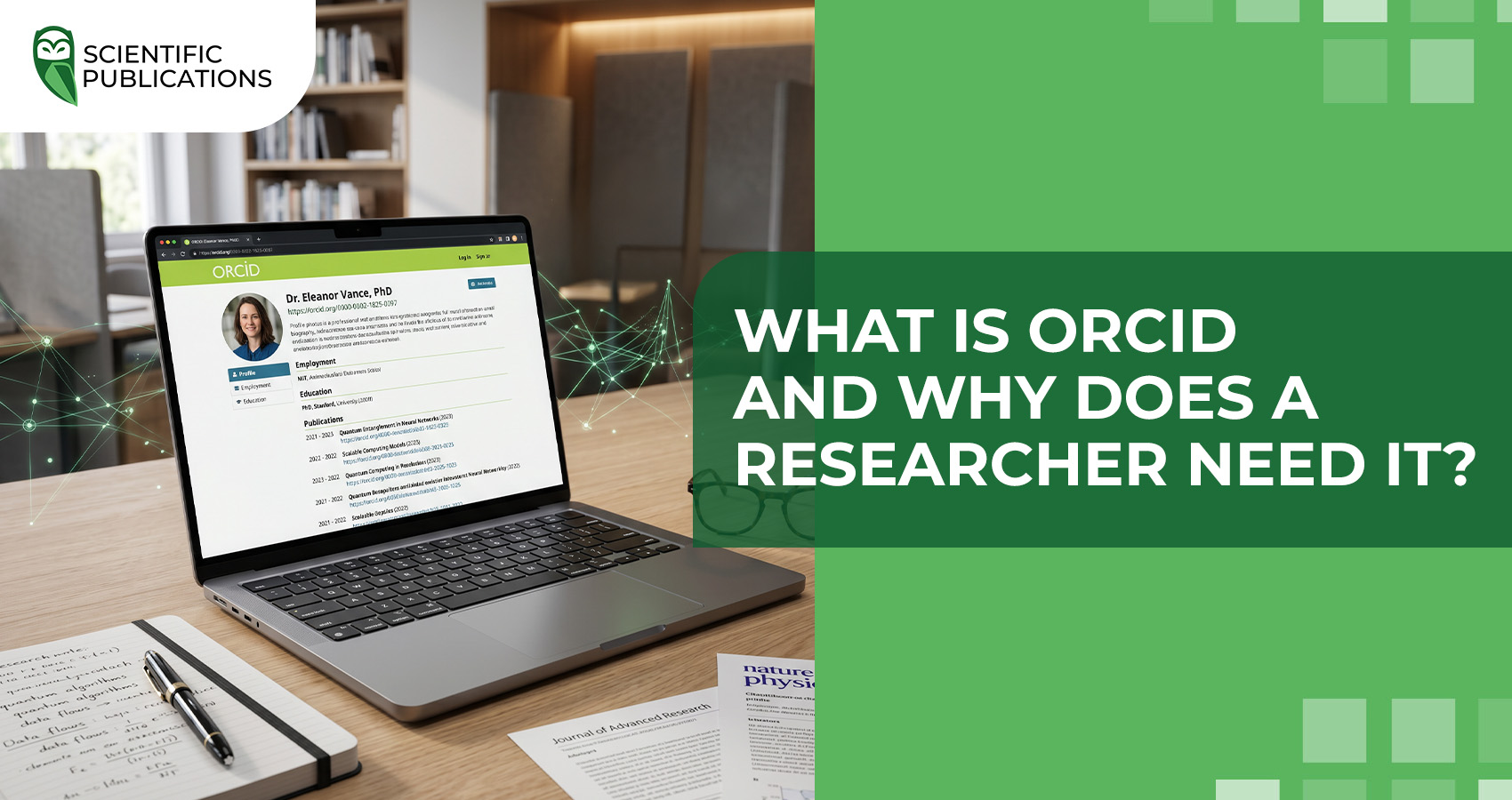
Open Researcher and Contributor ID (ORCID) is a digital scientific identifier of a researcher, which is presented in the format of a link with a 16-digit number, for example: https://orcid.org/0000-0000-0000-0000. It helps connect a researcher’s profile with their publications, grants, reviewing and other professional achievements. This is especially useful in cases where researchers’ surnames coincide, when changing workplace or when publishing in different languages.
What information does an ORCID profile contain?
- Personal information: name, biography, keywords, country, personal website, links to other profiles.
- Contact details: email addresses used for login and identity confirmation.
- Affiliations: workplace, position, institution, department, period of employment.
- Education: educational institution, speciality, period of study, degree obtained, certificates, etc.
- Scientific works: articles, books, conference materials, dissertations, datasets and other research results.
- Professional activity: membership in organisations, editorial activity, awards, distinctions, etc.
How does ORCID work?
Access to ORCID is free and open not only to researchers, but also to students, postgraduate students, lecturers, editors, reviewers, etc. To obtain your own identifier, you only need to register in the system. After that, you should fill in your profile or transfer data from other scientific services that have integration with ORCID.
It is worth noting that despite changes to data in the profile, in particular the name, workplace, education or email, ORCID remains unchanged. This identifier is provided to the researcher once and can be used by them throughout their entire scientific career.
Why does a researcher need ORCID?
ORCID is useful because it helps reduce the likelihood of errors when identifying a researcher. Usually, difficulties may arise due to identical names, different variants of surname spelling or a change of workplace. As a result, scientific works may be mistakenly attributed to another author.
Thanks to ORCID, a researcher can avoid such confusion and correctly link all their scientific works and other materials to their own profile. In particular, a digital scientific identifier may be needed when:
- submitting an article to a journal
- registering in publishing systems
- preparing a grant application
- creating a profile on a university website
- adding information to scientific repositories
- synchronising data with systems that support ORCID
In general, ORCID is not mandatory for all researchers, but it is often required by journal editorial offices, publishers, scientific institutions, grant organisations and platforms connected with scientometric databases. Having this identifier helps a researcher correctly connect their publications with their author profile and increase the visibility of scientific results in international systems.
Have you encountered difficulties with publication in journals indexed in Scopus or Web of Science? Contact the company Scientific Publications. Our specialists will help you choose a quality journal and will support you at all stages of the publication process. Do you have any questions left? Fill in the form on the website below, and our manager will contact you shortly. Together towards new scientific achievements!